What is Urban Biodiversity?
The academic definition is: the diversity of ecosystems, species, and genetics within a city. The layman’s version can be distilled into one word: variation.
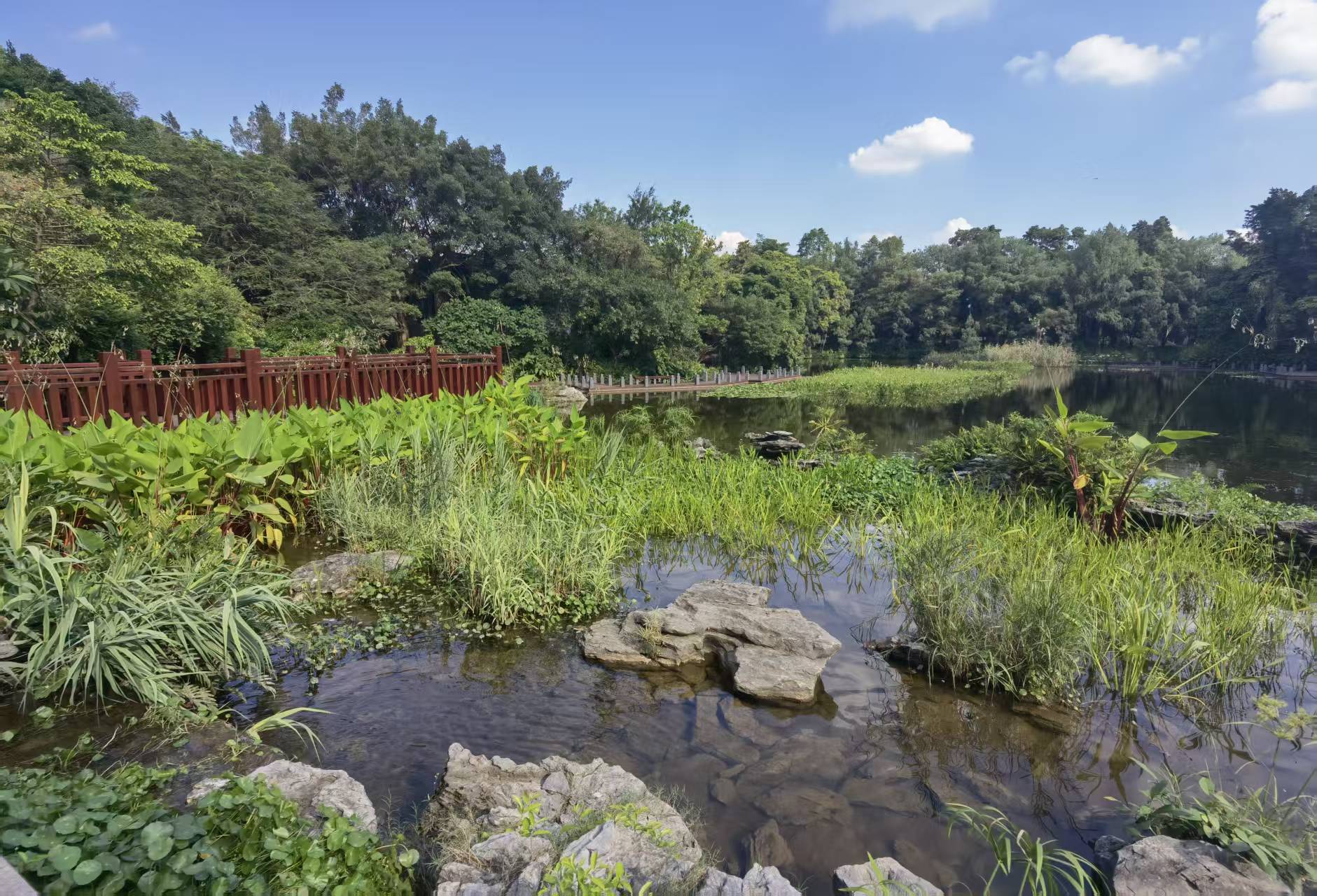 Figure 1. A snapshot of the Haizhu Wetland in Guangzhou, China
Let me give an example to make this clear. You walk out of your residential compound gate and see the courtyard of CEO Wang’s villa across the street. It has tall, straight American Red Maples, a neatly trimmed Kentucky Bluegrass lawn, a row of expensive-looking heather along the edge, dotted with a few Italian Cypresses and dozens of unrecognizable, precious imported flowers. You look back at your own compound and see two rows of rustic Chinese Scholar Trees with a few Honeysuckles mixed in. You immediately think that the biodiversity in your yard is not as good as CEO Wang’s. Yes, you are right. If we use the number of plant species as an indicator of biodiversity (Alpha diversity), for a yard of the same area, if the compound has fewer species than Wang’s, the biodiversity is lower.
If you then look next door at CEO Li’s house: American Red Maple + Kentucky Bluegrass + …; CEO Liu’s house: American Red Maple + Kentucky Bluegrass + …; CEO Chen’s house: American Red Maple + Kentucky Bluegrass + … The entire villa area is a product of developers copying and pasting. So, the biodiversity measured by the difference in species composition is very low (Beta diversity). The total number of species in the compound plus the villa area represents the diversity of this region (Gamma diversity). Thanks to the villa area, it looks quite high. However, measuring urban biodiversity isn’t just about counting how many species there are; it also requires looking at quality. An important standard for quality is whether the species represent the species distribution of the natural region where the city is located. Seen this way, the Chinese Scholar Trees and Honeysuckles in the compound are native to Beijing. Even though there are fewer species, the quality of biodiversity is higher than in Wang’s yard full of exotic species.
Looking at the plants themselves, if the seedlings come from different regions and different parent plants, there will be higher genetic diversity. However, if they are all clonally propagated materials from the same batch of parent plants, the genetic diversity is very low. From the scale of the entire city, the greenery in the compound and the villa area both belong to the same type of ecosystem: residential green space. This is relatively uniform and does not have high ecosystem diversity. Therefore, the core of urban biodiversity is variation. Whether it is the type of ecosystem, the number and composition of species, or the genetic origin of the species, we hope to see variation.
Why emphasize variation? Because the urban environment is complex and changeable under human influence, forming various microhabitats. Moreover, cities are facing unprecedented shocks brought by climate change. Only when the ecosystems, species, and genetic material in the city have sufficient variation can they adapt to various habitats and have enough redundancy to buffer various shocks, maintaining a stable urban ecosystem. For example, when a pest finds a certain tree cultivar very tasty, if you have planted only this single variety, it is easy to be wiped out completely. If this tree species has multiple seed sources, there will always be some trees from certain sources that can resist this pest and survive.
Why do we need urban biodiversity? Because biodiversity is the foundation of human society’s survival. The oxygen, food, and clothing we need mainly come from living organisms. Even though technological progress has reduced the direct dependence of urban residents on biodiversity to a certain extent, we still need biodiversity to meet many life and psychological needs. The urban ecosystem we live in needs biodiversity to maintain its stability and resilience; otherwise, we will pay high costs to ensure we can continue living in the city. For example, without the assistance of predators like weasels, owls, and snakes, we would have to deploy more highly toxic baits to avoid the proliferation of rodents in the city.
Are Mosquitoes, Pollen, and Wild Boars Problems Caused by Good Urban Biodiversity?
Urban biodiversity should not take the blame for this. Contrary to our intuition, pollen allergies, mosquito bites, and wild boars entering the city do not reflect a good state of urban biodiversity, but rather a serious deficiency in it.
In a previous post, I discussed the two reasons for the increase in pollen allergies in Beijing. One is changes in human constitution; due to lifestyle changes, urban residents are more easily induced to have allergies. The other is a sharp increase in the amount of allergenic pollen. A large number of studies show that because urban residents live indoors for a long time lacking biodiversity, and lack exposure to various environmental microbes and allergens in early childhood, they are more prone to allergies in adulthood. Therefore, health departments in developed countries encourage children to play more in natural environments with high biodiversity to build immunity. If we can provide these environments rich in biodiversity in cities, it will help better regain this ability.
The sharp increase in allergenic pollen volume is precisely direct evidence of insufficient urban biodiversity. Urban landscaping uses a few species of plants in large quantities, such as Chinese Arborvitae (Sabina chinensis), leading to a lack of urban tree diversity, ultimately harming residents’ health. Internationally, since the 80s, the “10-20-30” rule has been emphasized for urban landscaping trees. That is, the number of one species cannot exceed 10% of all trees, trees of the same genus added together cannot exceed 20%, and trees of the same family added together cannot exceed 30%. Our survey of the area within the Fourth Ring Road of Beijing in 2002 found that Populus tomentosa (Chinese White Poplar) accounted for over 16% and S. chinensis exceeded 12%. Data from the Beijing Landscape and Forestry Bureau shows that there are over 6 million female willow and poplar trees in the whole city. Therefore, allergies caused by pollen and catkins are not by-products of improved biodiversity, but consequences of ignoring biodiversity in early urban greening.
What about mosquito bites? If there are more trees and grass in the compound, there will be more mosquitoes. This should be indisputable, right? Yes, more trees and grass mean more places for water to accumulate, providing breeding grounds for mosquitoes, as well as places for feeding and hiding, which indeed leads to an increase in the number of mosquitoes. However, similarly, this precisely reflects that urban biodiversity is not good, but seriously insufficient. In nature, the number of mosquitoes is controlled by natural enemies and environmental conditions. In the water, various aquatic animals feed on mosquito eggs and larvae, such as dragonfly nymphs, tadpoles, and fish; on the ground, various geckos and frogs, and in the air, birds, bats, and carnivorous insects like dragonflies prey on a large number of adult mosquitoes. This ecological chain is often destroyed during the urbanization process. Urban greening usually focuses on increasing plants, and restoring this ecological chain takes time. Often, the massive use of chemicals to control mosquitoes accelerates the collapse of this ecological chain. Thus, the increase in mosquitoes further reminds us of the importance of maintaining urban biodiversity.
Wild boars entering the city also reflects the negative impact of human activities on biodiversity, not a sign that biodiversity is improving. In nature, due to human hunting and the fragmentation and loss of habitats, apex predators that hunt wild boars have disappeared or gone extinct, causing the wild boar population to explode due to the loss of natural enemy control. Coupled with human feeding and poor garbage management, wild boars are gradually drawn from natural areas into the city. Finally, the tragedy of human-beast conflicts occurs.
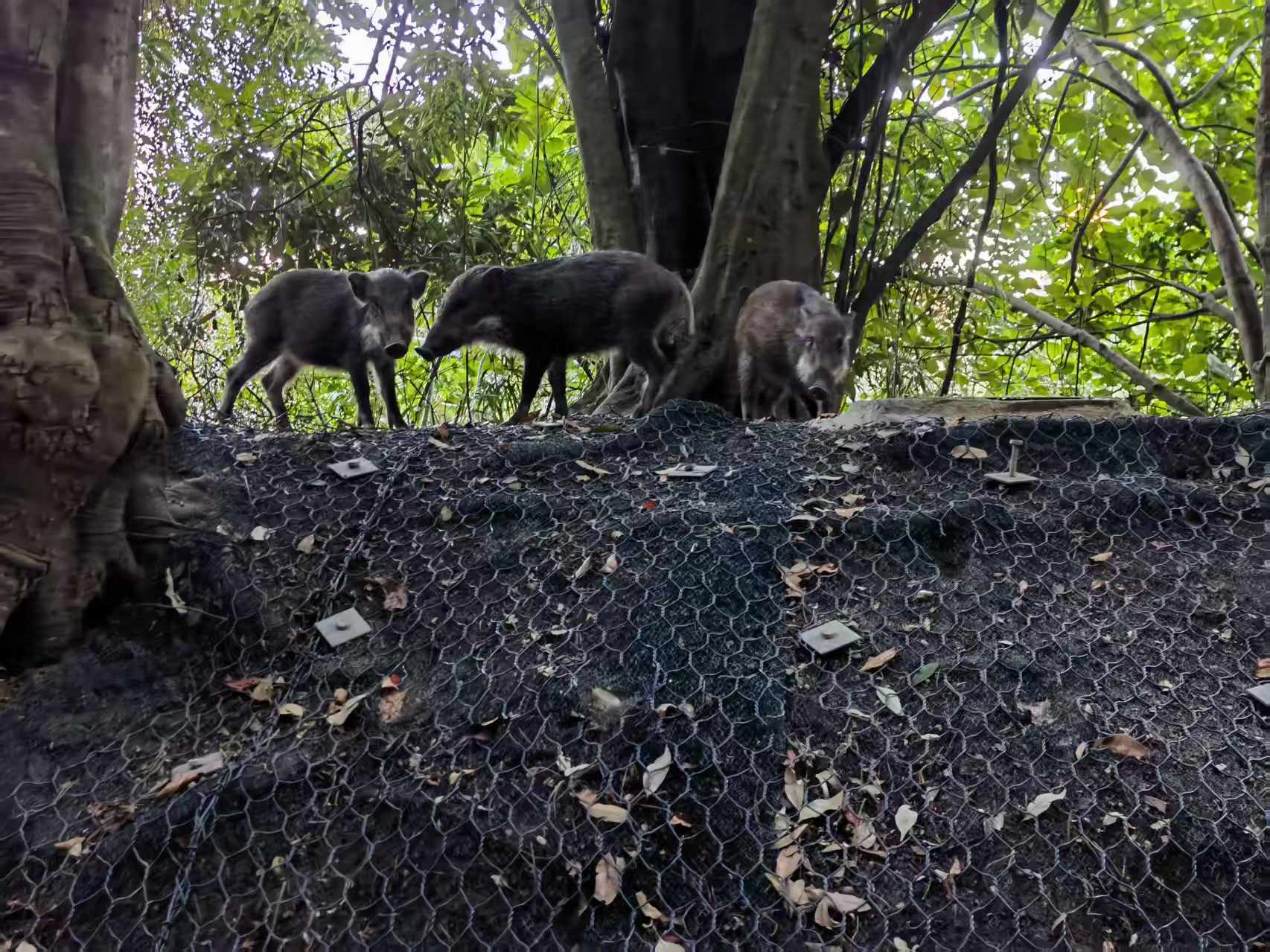 Figure 2. Three wild boar piglets near the Hong Kong University campus
Can We Choose What Kind of Urban Biodiversity to Have?
Can we keep only “good” urban biodiversity, like beautiful birds and animals, while eliminating “bad” biodiversity, like mosquitoes, snakes, and noisy birds and frogs? The answer is No.
First, every organism in nature has its value for existence and is a link in the tightly connected ecological chain. For example, although mosquitoes are annoying, they are a food source for many birds and carnivorous insects, and the frightening snakes help us control rodents in the city. Second, to eradicate “bad” biodiversity, we may have to pay a huge price, but the result is not guaranteed. We have historical lessons in this regard. The “Four Pests” campaign in the past failed to achieve its goal even with nationwide mobilization and instead caused huge damage to biodiversity. Finally, urban biodiversity does not exist independently; it is influenced by the biodiversity in the surrounding natural environment and the intentional or unintentional introduction of species by humans. Eliminating some “bad” species might free up space for the entry of other “worse” species.
But this does not mean we can only passively endure everything. The urban ecosystem is a habitat created by humans for themselves and has its particularities. Urban biodiversity is the same, being directly influenced by human activities. We can take active management measures to reduce its negative impacts and increase its positive contributions. For example, strengthening the management of urban green spaces, cleaning up breeding and growing places for mosquitoes, and strengthening the restoration and protection of habitats for dragonflies and swallows that prey on mosquitoes. However, while fully utilizing the functions provided by biodiversity, we need to realize that no measure will have a 100% effect. We should be mentally prepared to coexist with mosquitoes for a long time (mosquitoes have outlasted the dinosaurs and will likely outlast humans too), and do a good job of personal protection against mosquito bites in daily life.
Similarly, due to the particularities of the urban environment, we cannot introduce apex predators in and around the city. Therefore, active measures such as capture and release or culling need to be taken to control wild boars, raccoon dogs, and other animals that pose threats to humans. Cities in North America faced problems brought by wild animals earlier than we did because of better environmental protection, and many of their management measures are worth our reference. For example, erecting iron spikes on seaside city buildings to prevent seabirds from roosting, requiring residents’ trash cans to be locked in areas where raccoons and black bears frequent, residents planting plants deer don’t like, and issuing hunting permits every year to control the deer population, etc.
In a word, we cannot shape urban biodiversity as we please, but we can regulate its impact to achieve a win-win situation for biodiversity conservation and the construction of a livable city.